Sprinkler System Maintenance: A Practical NFPA 25 Checklist
What to inspect, test and maintain on a fire sprinkler system, and how often, explained in plain terms for the people who run the building.
- 6 min read
- 3 sections · 3 FAQs
A sprinkler system can sit untouched for years and still be expected to work perfectly in the first minutes of a fire. Whether it does depends on what happens in between. Closed valves, painted heads, blocked pipes and pumps that have not run in months are recurring causes of sprinkler systems underperforming.
NFPA 25 is the most widely used reference for the inspection, testing and maintenance (ITM) of water-based fire protection systems, and many Indian facilities follow it alongside the National Building Code (NBC 2016, Part 4) and the conditions of their fire NOC. This checklist summarises the typical intervals; always refer to the current edition of NFPA 25, the manufacturer’s literature and any requirements set by your local fire service or insurer.
Set up the programme before the checklist
NFPA 25 places responsibility for ITM on the property owner or their designated representative. In practice, someone on site should own the programme: knowing where every control valve is, what the system was designed to protect, and who carries out each test.
Keep the as-built drawings and hydraulic design data (usually on a data plate at the riser or in the handover file), and note the hazard and storage arrangement the system was designed for. Many later problems come from the building use changing while the sprinklers stay the same. Agree in writing which tasks your maintenance staff will do (usually the weekly and monthly visual checks) and which need a qualified fire protection contractor (flow tests, internal inspections and pump performance tests).
Typical inspection and testing intervals
The intervals below reflect common NFPA 25 practice for wet pipe systems. Dry pipe, pre-action and deluge systems have additional tasks, and the standard is revised every few years, so check which edition your facility has adopted.
Weekly and monthly
Frequent checks are mostly visual and can be done by trained in-house staff using a simple log sheet.
- Control valves: confirm each is in its normal (usually open) position, sealed, locked or electrically supervised, and accessible. Sealed valves are typically inspected weekly; locked or supervised valves monthly.
- Gauges: read and record system and supply pressures. Investigate any sudden drop.
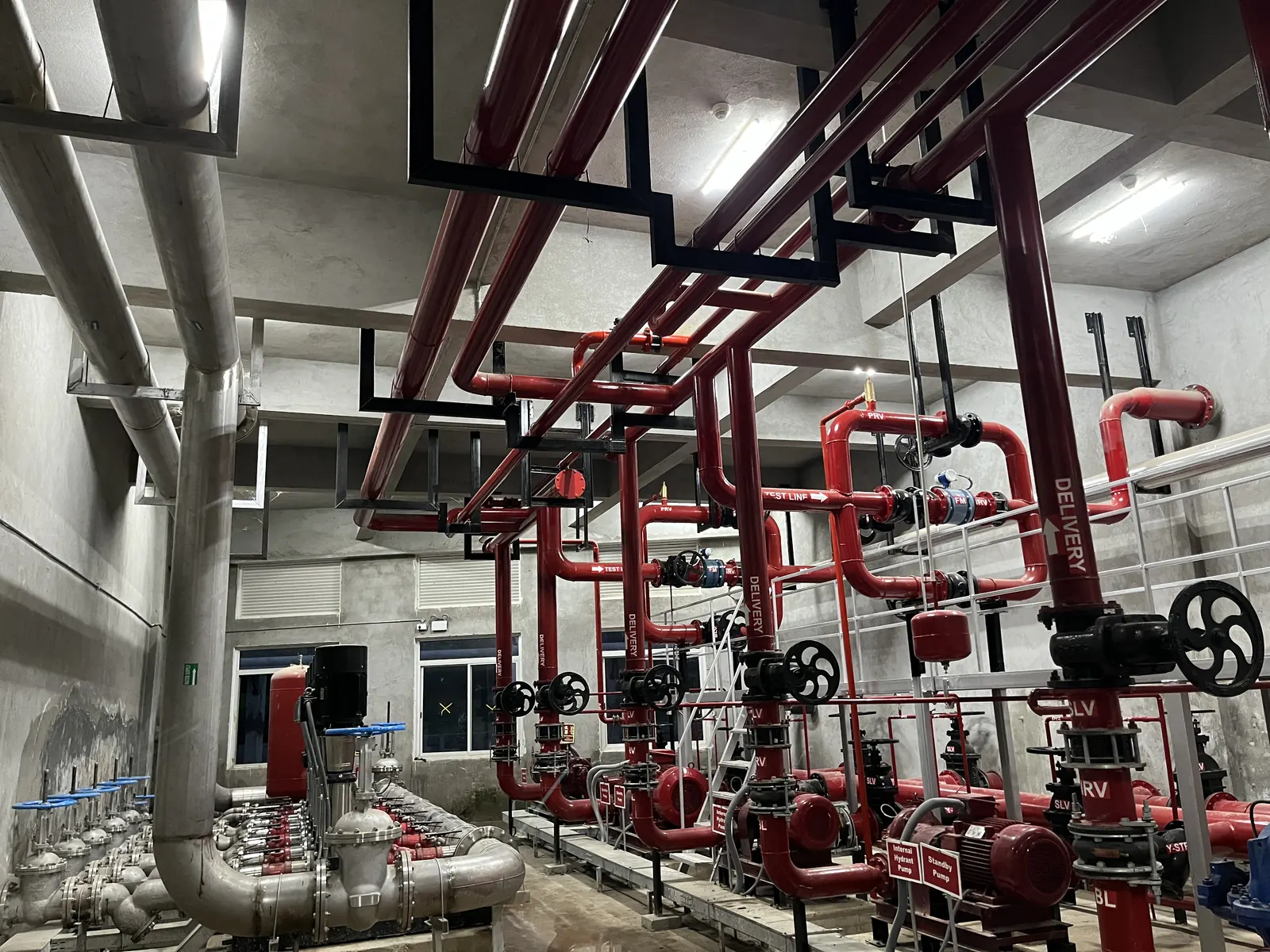
- Fire pumps: run each pump without flow (a churn test) at the interval set for its driver, typically weekly for diesel engines and weekly or monthly for electric motors. Record suction and discharge pressures, plus diesel engine temperature, oil pressure, fuel level and battery condition.
Quarterly
Quarterly tasks make sure the system will tell you when it operates or when someone interferes with it.
- Inspect water flow alarm devices, supervisory switches and valve tamper switches for physical damage.
- Test mechanical water motor gongs by flowing water through the inspector’s test connection or bypass. Vane-type and pressure-switch flow alarms are typically tested semi-annually.
- Inspect the fire service inlet connection: caps in place, threads undamaged, no leaking check valve, and clear access for a fire tender.
Annual
The annual visit is the most thorough and is normally carried out by a qualified contractor.
- Main drain test at each riser: record static pressure, open the main drain fully, record residual pressure and compare with earlier results. A significant fall from the baseline can point to a partly closed valve or an obstruction in the supply.
- Fire pump flow test at churn, rated and peak flow, compared with the manufacturer’s certified curve and the original acceptance test.
- Sprinkler heads inspected from floor level for leaks, corrosion, paint, physical damage, loading (dust, lint or grease) and correct orientation. Damaged or painted heads are replaced, not cleaned.
- Spare sprinkler cabinet checked for the correct types and temperature ratings, plus the right sprinkler wrench.
Five years and beyond
Longer-interval tasks are the easiest to forget.
- Internal inspection of piping, typically every five years, for corrosion, scale or foreign material. Findings may lead to a full obstruction investigation.
- Internal inspection of alarm valves, check valves and strainers.
- Gauges replaced or checked against a calibrated gauge, typically every five years.
- Sample testing of sprinklers at the ages set in the standard, for example 50 years for standard-response and 20 years for fast-response heads, with more frequent testing for heads in harsh environments.
Problems that checklists often miss
Two issues cause trouble even on sites with a well-kept log book.
Obstructions and changes in use
Sprinklers only work if water reaches the fire. In warehouses especially, racking added after handover, higher stacking, new mezzanines, ducts and light fittings can block spray patterns. NFPA 13 sets minimum clearances below sprinkler deflectors, typically 450 mm (18 in.) in most storage situations and more for some special sprinklers, and it is worth walking the floor with that in mind.
What is stored matters as much as how it is stacked. Moving from cartons of metal parts to plastics or aerosols can put the hazard outside the original design. If the use has changed, ask your design engineer to review the system before the next fire NOC renewal.
Impairments and record keeping
Whenever any part of the system is shut down, treat it as an impairment: tag the valve, inform your contractor and insurer where required, reduce hazards in the affected area, consider a fire watch, and restore and test the system as soon as the work is done.
Keep signed, dated records of every inspection, test and repair, including the deficiencies found and the action taken. NFPA 25 typically requires records to be kept until at least a year after the next test of the same type, and original acceptance records for the life of the system.
Frequently Asked Questions
Is NFPA 25 mandatory in India?
NFPA 25 is an American standard, so it is not automatically law in India. It is, however, widely referenced by consultants, insurers and project specifications, and NBC 2016 expects fire protection systems to be kept in working order. Your fire NOC conditions and insurer determine what you are actually required to follow.
Can our own maintenance staff do the checks?
Trained in-house staff can usually handle the weekly and monthly visual inspections and pump churn runs. Flow tests, internal pipe inspections, pump performance tests and repairs are best done by a qualified fire protection contractor with calibrated equipment.
What should we do about a painted or damaged sprinkler head?
Replace it with a head of the same type, response, orifice size and temperature rating from your spare cabinet, then restock the cabinet. Do not clean off paint or try to repair a sprinkler, as this can affect how it operates.